
Project Maui Nui, presented by Maui Economic Development Board (MEDB), convened the sixteen fellows of the 2026 Ka Ipu Kukui cohort for an intensive three-day workshop to spark innovative solutions that strengthen resilience across Maui County. Ka Ipu Kukui is a year-long program for community-identified, emerging leaders and conceived to address planning for Maui Nui’s future.
The workshop was facilitated in partnership with the Pacific Disaster Center (PDC), bringing together experts, community leaders, and emerging changemakers committed to building a safer, more sustainable future.
MEDB Program Director, Annette Lynch opened the event by guiding fellows through the Project Maui Nui process and presenting their central challenge: to design initiatives that encourage resilience-building, reduce future disaster losses, and support thriving communities throughout Maui County. Working in teams, fellows collaborated to identify a core problem and develop a viable, community driven solution to pitch to a panel of judges on the final day.
“Project Maui Nui is mainly about the process – for participants to learn the process of taking an idea from concept to delivery,” said Lynch, “We help them set goals and expectations for what they can get out of it for their own personal and professional development as leaders.”
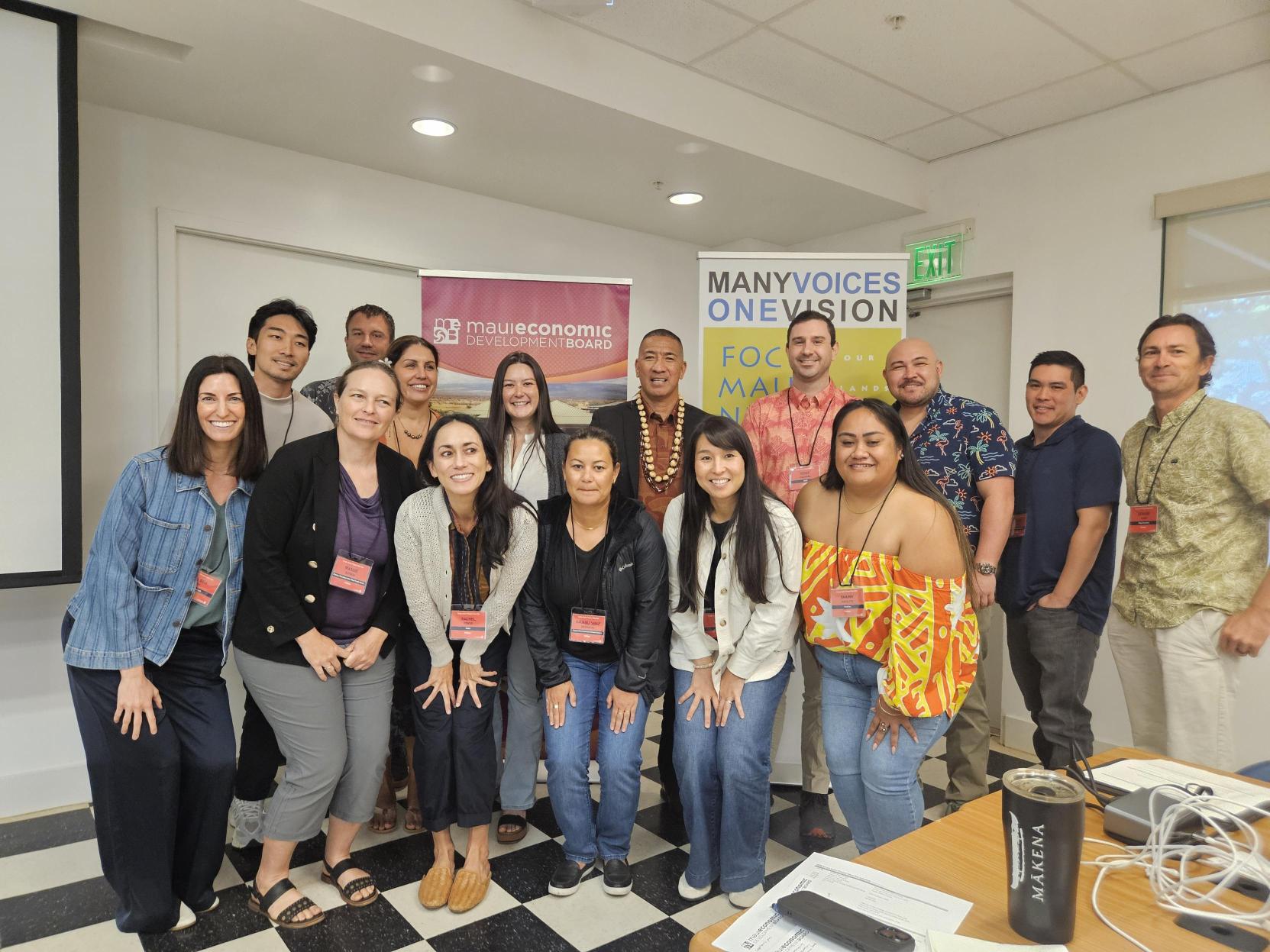
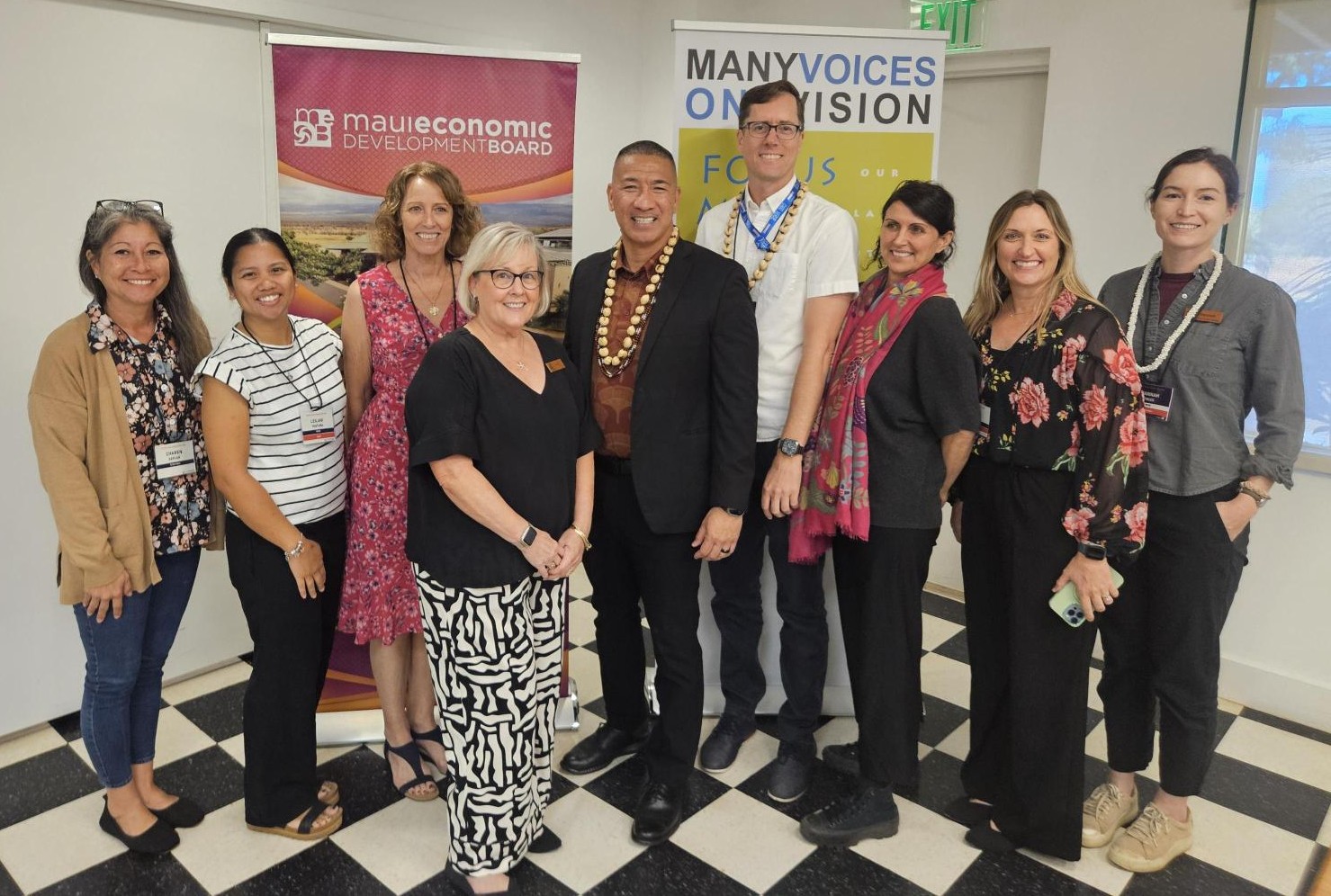
Expert Speakers Inspire Vision and Innovation
Three distinguished speakers provided critical knowledge and real‑world perspectives to shape the fellows’ thinking:
- Amos Lonokailua‑Hewitt, Administrator of Maui Emergency Management Agency (MEMA), emphasized the importance of community preparedness, unified emergency response, and cultural values in disaster management. He highlighted the pivotal role of volunteer engagement and nonprofit collaboration in strengthening community readiness.
- Todd Bosse, Disaster Management Specialist at PDC, shared insights on PDC’s global mission to support resilient communities through science based decision support tools. He discussed their work in hazard monitoring, wildfire response, and the Lahaina rebuild effort, and introduced Disaster Alert, a tool offering global access to emergency information.
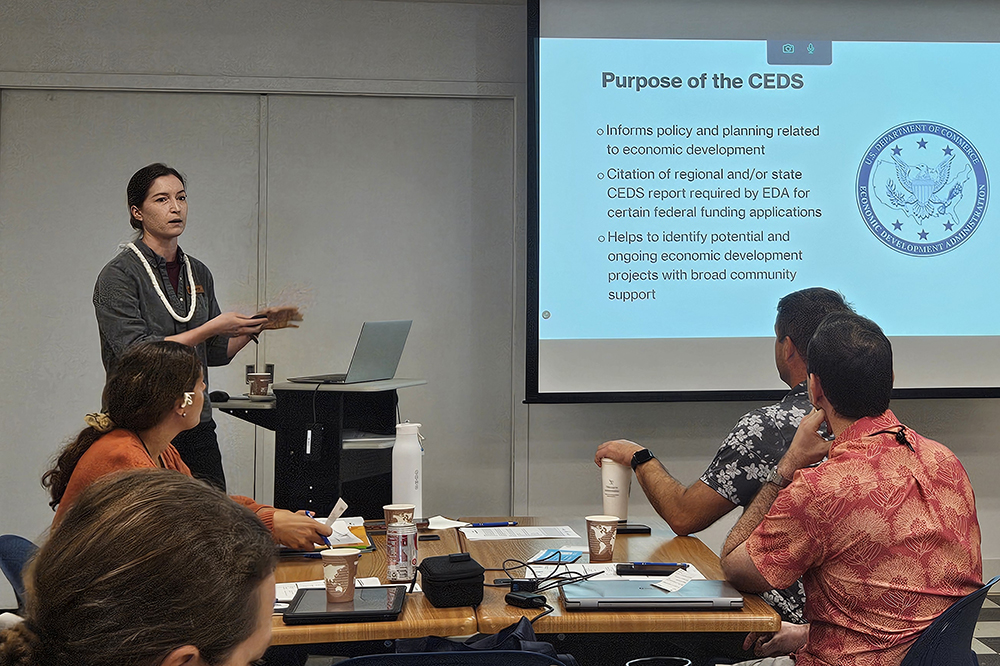
- Hannah Trees, Grant Writer and Researcher for MEDB, offered an overview of the Maui County Comprehensive Economic Development Strategy (CEDS), a resource for economic development planning and federal funding applications. She also shared findings from sector-specific focus groups covering areas such as agriculture, housing, creative industries, energy, Hawaiian culture, and science and technology. Key priorities included improved permitting processes, expanded workforce training, renewable energy infrastructure, and enhanced cultural education.
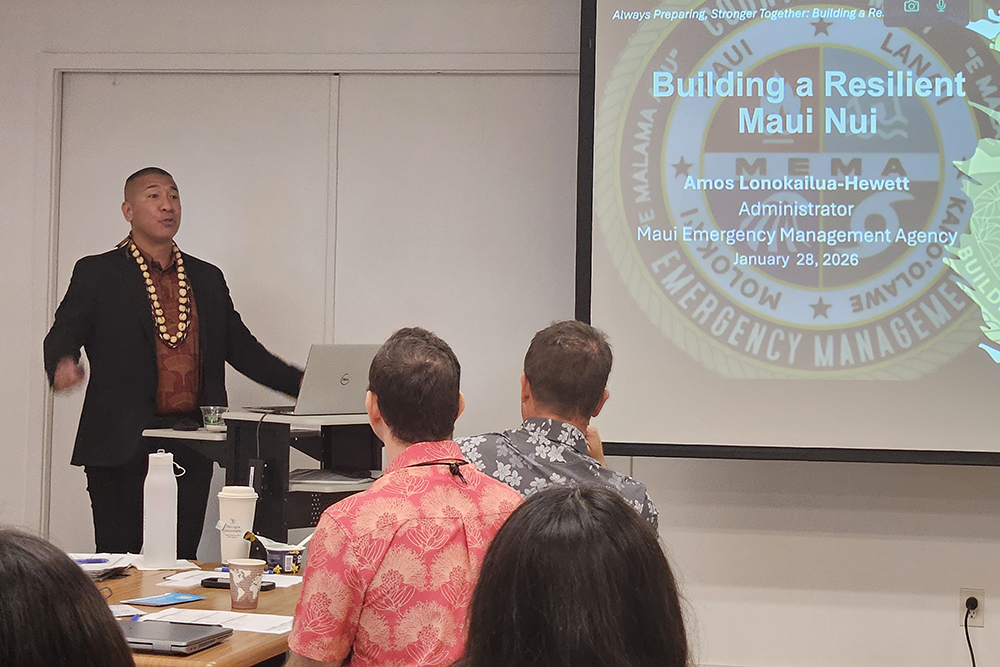
Amos Lonokailua-Hewitt, MEMA
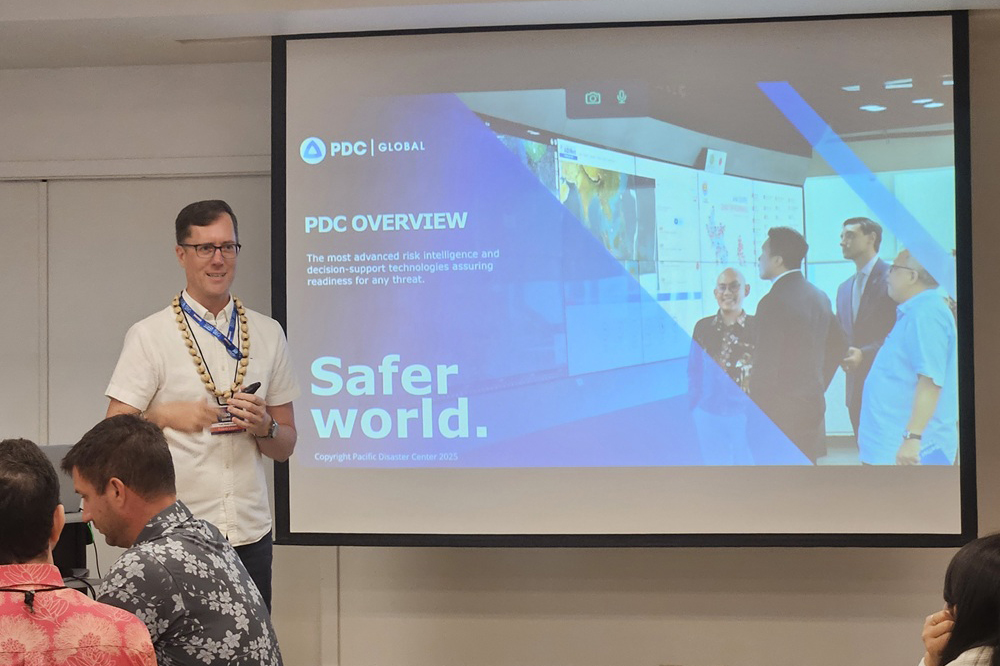
Todd Bosse, Pacific Disaster Center
Teams Refine Concepts with Coaching
On Day 2, fellows continued developing their projects with support from eight expert coaches. Todd Bosse was joined by PDC colleagues Ray Shirkodai, Executive Director, and Annie Collopy, Senior Disaster Services Analyst. Also coaching were David Daly, Business Development Center Director, Maui Economic Opportunity (MEO); Brittany Heyd, Co-founder, Mana Up; Tara Sabado, Planning Coordination Section Chief, MEMA; Sara Tekula, Kula Community Watershed Alliance; and Wayne Wong, Maui Center Director of Small Business Development Center (SBDC).
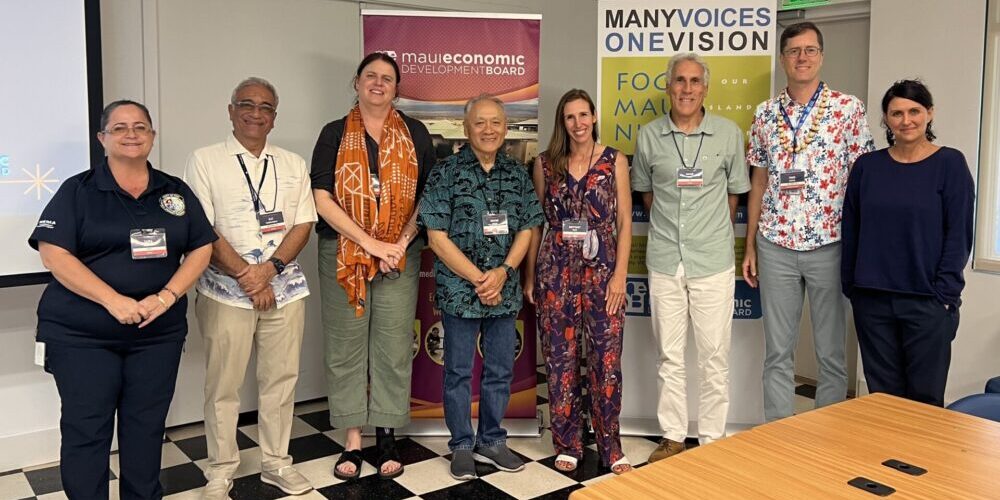
L. to R. Tara Sabado, MEMA; Ray Shirkodai, PDC; Sara Tekula, Kula Community Watershed Alliance; Wayne Wong, SBDC; Brittany Heyd, Mana Up; David Daly, MEO; Todd Bosse, PDC; Annie Collopy, PDC.
Pitch Day Showcases Community-Focused Solutions
During Day 3’s culminating pitch session, teams delivered 10‑minute presentations to a panel of judges:
- Kono Davis, Deputy Administrator, MEMA
- Andrea Finkelstein, Secretary, Hawai‘i Volunteer Operations of Active Disaster (VOAD)
- Jade Rojas‑Letisi, Director of Economic Development, County of Maui
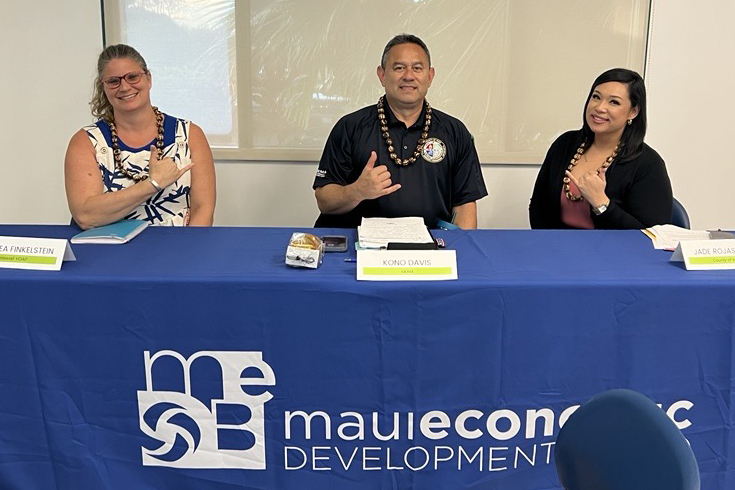
L. to R. Andrea Finkelstein, Hawaii VOAD; Kono Davis, MEMA; Jade Rojas-Letisi, County of Maui OED.
Concepts addressed a wide array of community needs, including childcare, homelessness, Maui’s film industry, and aquaculture solutions to improve local food security. After deliberation, judges announced that all teams would be awarded partial (hypothetical) funding of their proposed request. The judges gave each team direct feedback and overall emphasized the importance of strong research and data, especially for large-scale initiatives
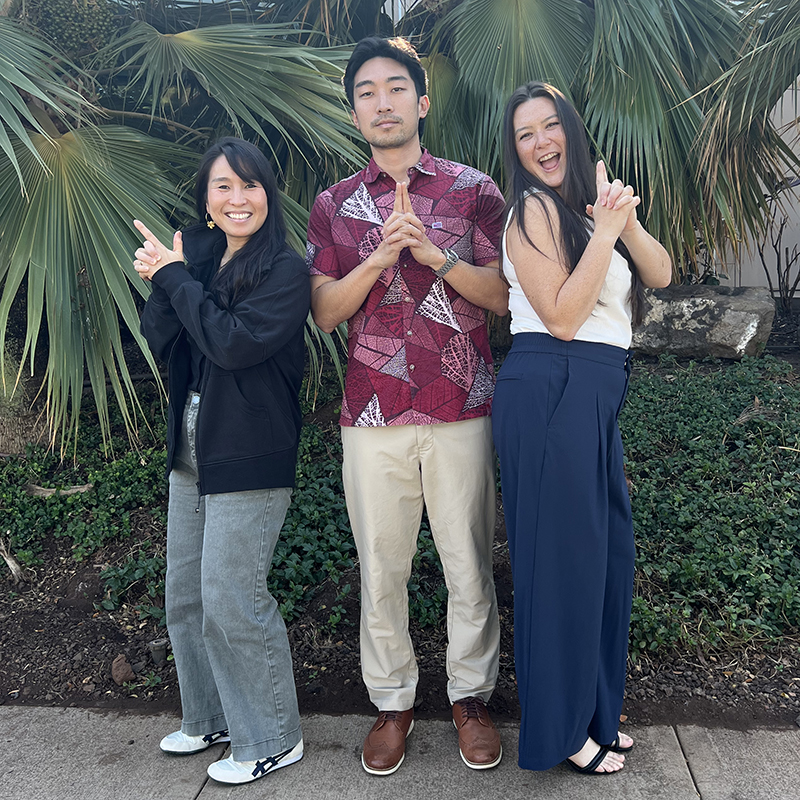
Keiki Malama Crew
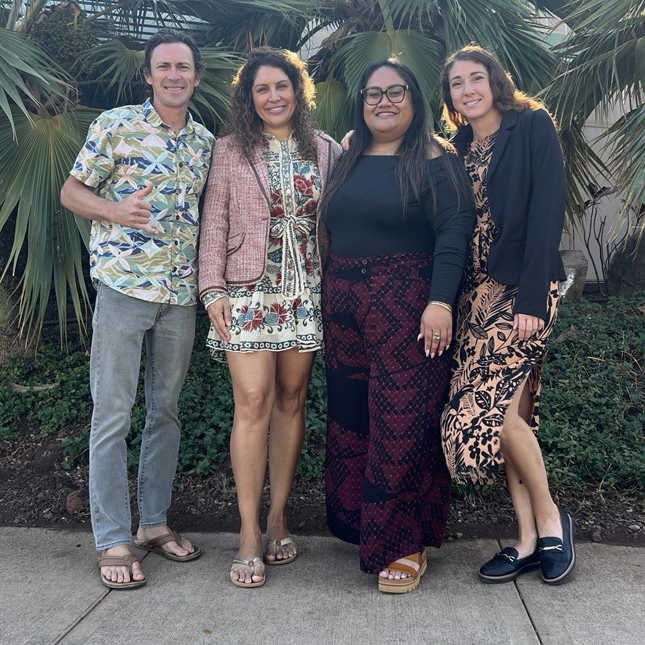
Huli Maui Nui
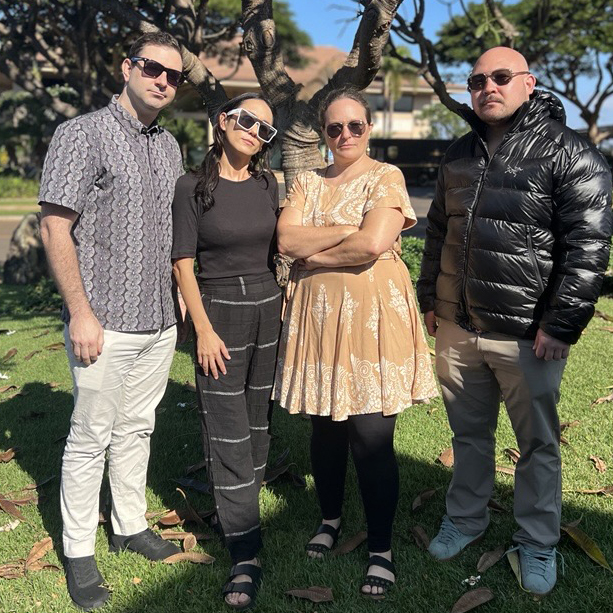
Maui Film Advocates
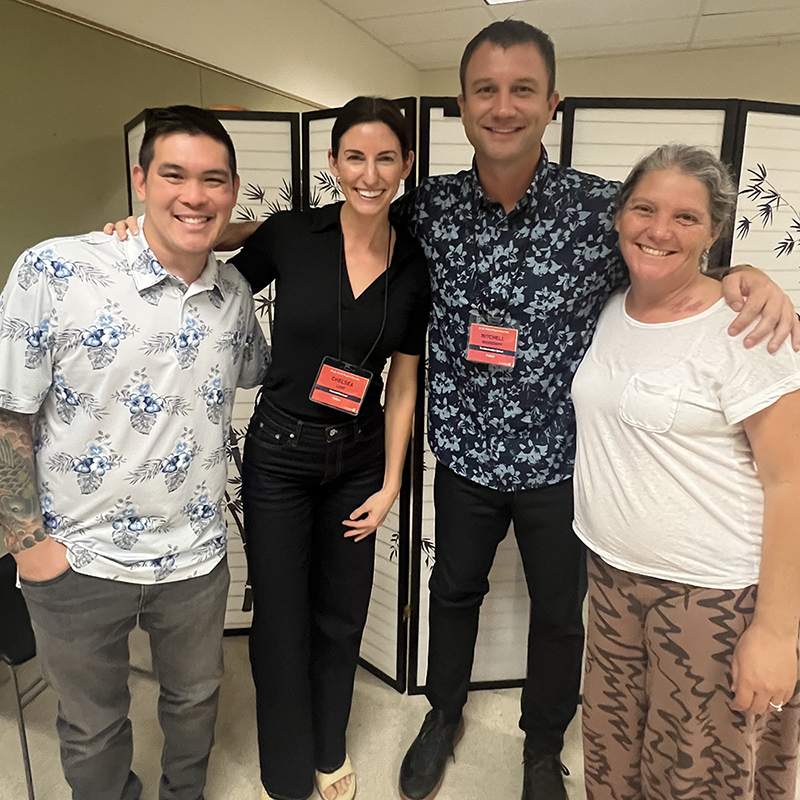
Maui Fishmongers
“Project Maui Nui was an amazing experience – putting a diverse group together under pressure, to come up with a project and pitch in three days.” said Yosef Onadera, a 2026 Ka Ipu Kukui Fellow and Director of Strategic Growth at MEDB. “It taught us that it is possible to work together, lean on each other’s strengths, and use our combined network to develop realistic real-world ideas to build resilience for our community.”
Continuing the Journey
The Ka Ipu Kukui Fellows will continue to meet in monthly Halawai to further develop a holistic appreciation and understanding of Maui Nui’s unique challenges. As their May graduation approaches, recruitment for the 2027 Cohort will commence in late spring. Visit kaipukukuifellows.org to learn more.